


Looking for Headache Relief? Try Physical Therapy
We’ve all had them, and we all hate them: headaches are an easy way to ruin your day. Headaches and migraines are widespread and can develop for several different causes. Sometimes, those causes stem from musculoskeletal issues. In those cases, physical therapy at Iberia Sports & Rehab can help you find relief.
Are you struggling with persistent headaches? Have you tried everything and still aren’t sure what to do to get them under control? Give us a call. We can assess your headache, help identify triggers, and, in many cases, offer pain relief through manual therapy techniques.
Health Tips Interactive Tracker
Track Your Headache Management Goals

Not All Headaches Are the Same: Deciphering Your Symptoms
One of the reasons addressing headaches can be so difficult is that you need to determine the type of headache you have and its specific cause before you can find the right treatment. Our physical therapists can help with this process by performing a comprehensive evaluation of symptoms and potential triggers.
When you visit us, try to be as descriptive as possible about your headache. Here are some questions to keep in mind:
- Where do you feel your pain? Is it a tight band around your head? Is it behind one eye?
- Did the pain start in a different location (such as your neck) before moving into your head?
- How does the pain feel? Is it throbbing? Dull?
- What were you doing when the headache started?
- If you get frequent headaches, what patterns have you noticed? (For example, maybe you get headaches when you skip breakfast.)
- Are your headaches accompanied by other symptoms, such as nausea or light sensitivity?
In addition to reviewing your symptoms, our PTs might ask you to perform simple movement screens to evaluate your posture or to test the range of motion in your neck. We’ll also ask about any injuries you have suffered to your head, neck, or jaw.
All this information helps us better identify your headache and your options for treating it.
What We Can Do to Help You Find Lasting Headache Relief
Physical therapy is an excellent choice for addressing a specific type of headache: cervicogenic headaches.
Cervicogenic headaches develop due to issues in the neck. They’re a type of referred pain in which the problem in your neck causes pain in your head, usually radiating up the back of your head to the area around your temple, eye, and ear.
Different things can cause cervicogenic headaches, including poor posture, neck injuries, or degenerative conditions in the cervical spine.
If we determine you’re suffering from a cervicogenic headache, we’ll develop a customized plan to manage your headache pain and address the underlying cause. Techniques we might use include the following:
- Postural corrections to keep your entire spine in alignment
- Manual therapy techniques to mobilize the neck joint and manipulate the neck’s soft tissue
- Stretches to relieve tension and improve mobility in the neck and shoulders
- Strengthening exercises for your neck, upper back, and shoulders to provide additional support and stability
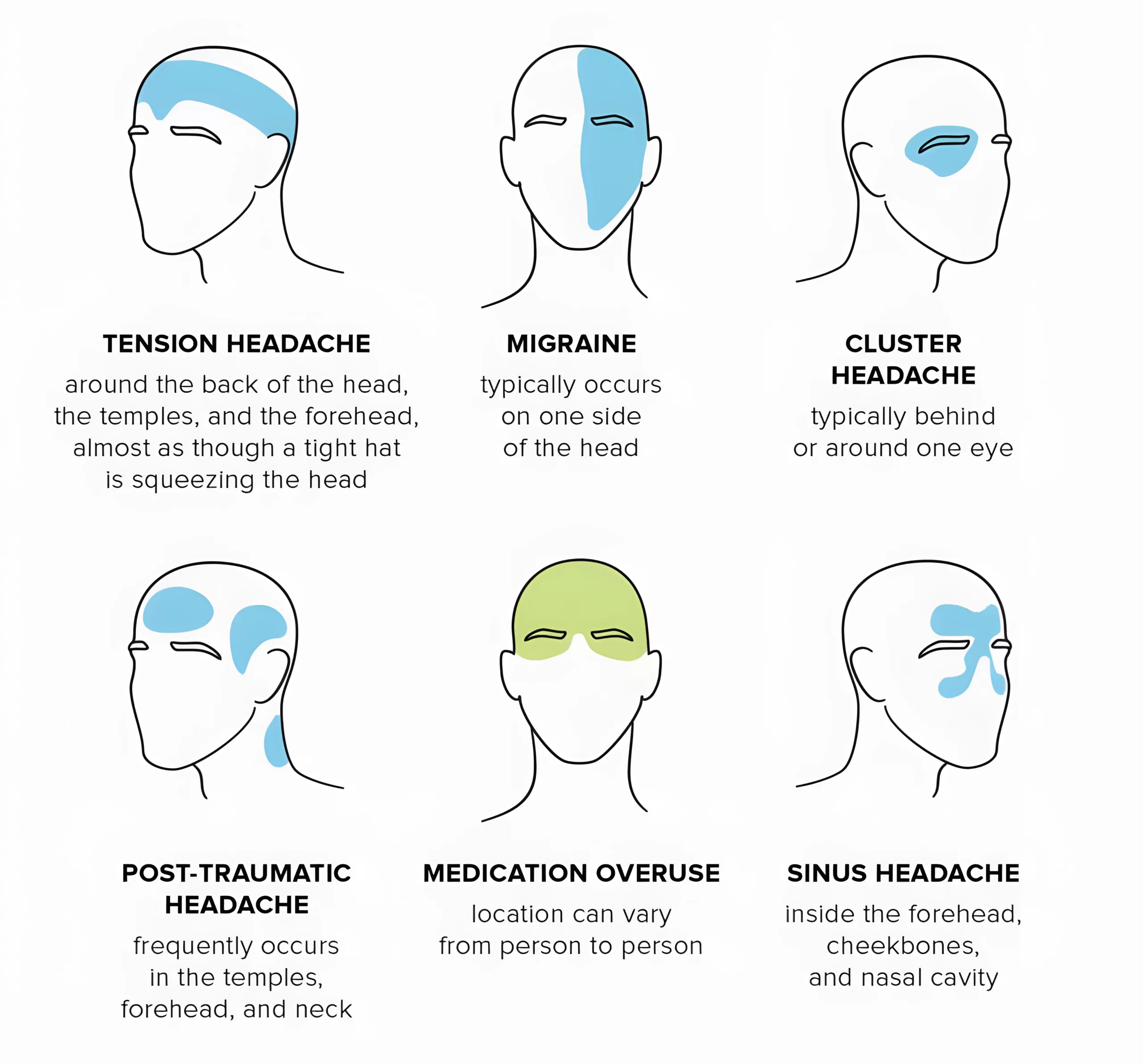
What About Other Types of Headaches?
Of course, we may discover you’re suffering from another headache type. In these cases, we may not be able to resolve the underlying cause of your headache (if there is one), but we can help you understand your headache better.
For example, many headaches have specific triggers. Migraines are notorious for this; people can develop migraines due to changes in their sleep schedule, eating certain foods, smelling certain scents, and more. Thanks to our comprehensive assessment, our PTs can help you better identify potential triggers and, if necessary, refer you to another specialist for treatment.
We might also be able to help with acute pain relief. Myofascial release and trigger point therapy are two manual therapy techniques that involve working out restrictions in your myofascia, a band of connective tissue that wraps around your muscles. There’s some evidence that myofascial release can help manage pain from migraines or tension-type headaches (another common headache type).
So, while these techniques might not resolve your pain, they offer a drug-free alternative to pain management.
Get Started with Headache Relief Today
If your headache has you at your wits’ end, schedule an appointment with Iberia Sports & Rehab. We’ll review your symptoms, help you better understand the potential cause of your headache, and help you find a treatment plan that works for you.
Sources: https://www.ncbi.nlm.nih.gov/pmc/articles/PMC8384005/, https://www.choosept.com/guide/physical-therapy-guide-headaches, https://assets.cureus.com/uploads/review_article/pdf/63337/20210930-9728-rrbw4w.pdf
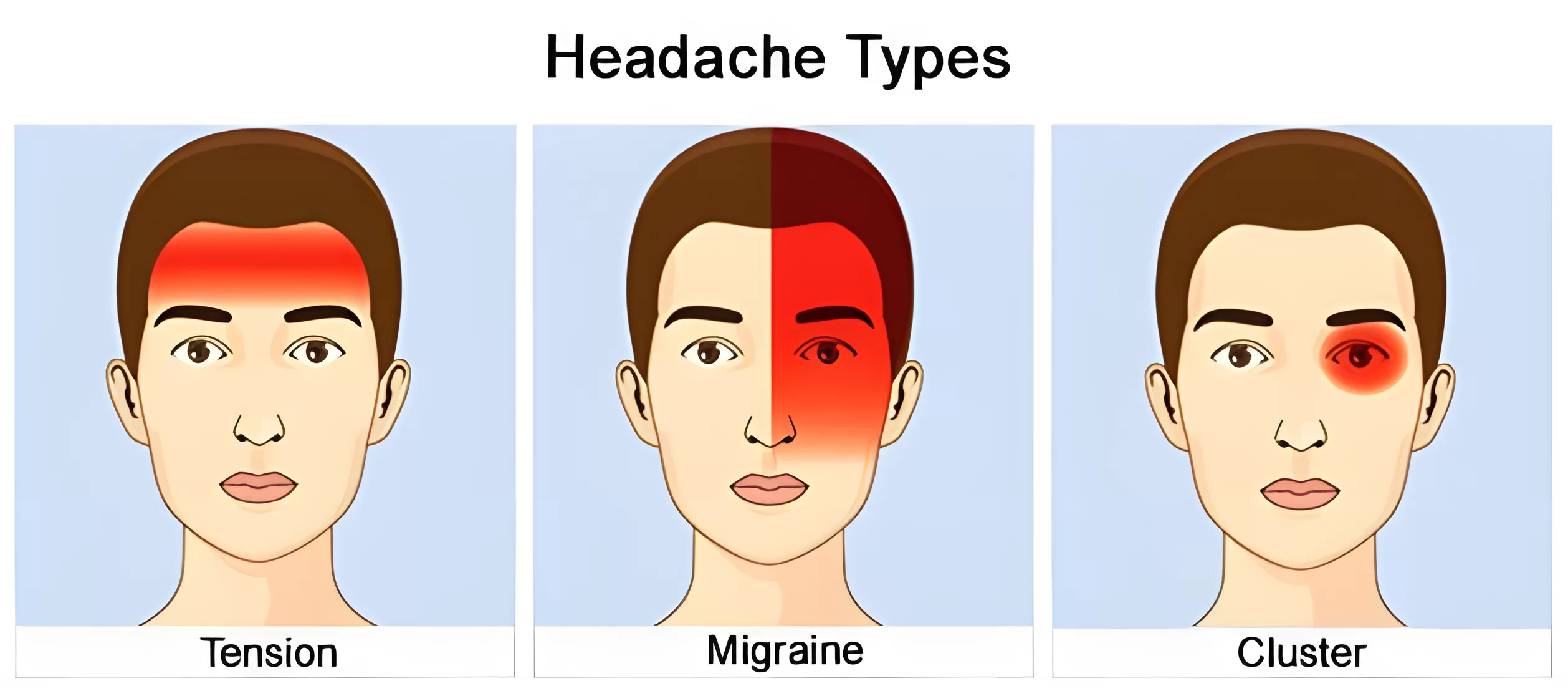
Understanding the Different Types of Headaches
So, what are the different types of headaches, anyway?
That’s a surprisingly tricky question, as there are over 150 different ones! Experts generally classify them into different categories based on whether or not they are primary (no underlying medical condition) or secondary (stemming from an underlying condition).
Here are some common ones.
Primary Headaches
- Migraine: Migraines cause recurring attacks, lasting 4 hours to 3 days, of throbbing or pulsing pain on one side of the head, plus additional symptoms like light or noise sensitivity or nausea.
- Tension: These headaches develop due to contracting neck, face, or jaw muscles. You’ll usually feel them as pressure on both sides of your head.
- Cluster: This type causes extremely painful, migraine-like headaches that occur around the same time for several weeks (i.e., in a cluster).
Secondary Headaches
- Sinus: A sinus headache occurs due to inflammation of your sinuses, which is where you’ll feel the pressure-like pain–in your cheeks, brow, or forehead.
- Cervicogenic: Because these headaches develop due to an underlying issue in the neck, they’re considered secondary headaches.
Not sure what type of headache you’re dealing with? Call Iberia Sports & Rehab to schedule an appointment — we’ll review your symptoms and help you get to the bottom of it!
Sources: https://www.ninds.nih.gov/health-information/disorders/headache
Exercise of the Month
Neck Glide
(Neck)
Stand tall with your shoulders relaxed and your head in a neutral position. Gently draw your head straight backward, keeping your chin level, like you’re trying to make a double chin. Avoid tilting your head up or down. Hold briefly, then return to the starting position. 3 Sets, 10 Reps. (Materials needed: none)
Healthier Chocolate Chip Cookies

These are absolutely the best Healthier Chocolate Chip Cookies that are soft, chewy, and loaded with dark chocolate chips.
Ingredients:
- 1/2 cup unsalted butter, softened at room temperature and packed
- 1/2 cup cane or coconut sugar
- 1 large egg
- 1 teaspoon pure vanilla extract
- 1/2 teaspoon baking soda
- 1/4 teaspoon salt
- 1 1/4 cups whole wheat or spelt flour
- 1/3 cup dark chocolate chips, divided
Instructions:
- In a large bowl, add butter and sugar; beat with a mixer until creamy.
- Add egg and vanilla extract, beat until combined. Add baking soda, salt and flour; beat until cookie dough is formed. Add 1/4 cup chocolate chips and stir with spatula.
- Place cookie dough in the freezer to chill for 20 minutes. In the meanwhile, preheat oven to 350 degrees F and line 2 cookie sheets with unbleached parchment paper or silicone baking mats.
- Scoop dough with a regular scoop, roll into balls and place on prepared baking sheets 3 inches apart. Cookies spread.
- Bake for 10 minutes and remove while cookies appear underbaked, puffy and light in color. Strategically place remaining 2 tablespoons of chocolate chips into cookies while they are still hot.
- Let cookies cool on a baking sheet for 15 minutes before transferring onto a cooling rack to cool more. As cookies cool, you will see delicious grooves covering chocolate chips like a blanket appearing.