


Sprained Your Ankle? Try Physical Therapy!
If you’ve never sprained your ankle yourself, you almost certainly know someone who has: ankle sprains are one of the most common orthopedic injuries, accounting for 15% of all sports injuries.
While most people see ankle sprains as minor injuries (think about all those movies where someone’s relieved an injury is an ankle sprain, not a broken bone), they still require care. Physical therapy is essential in creating the right environment for your ankle to heal, which can facilitate the process and help prevent future injuries.
Today, we want to share the story of one of our patients, a lifelong athlete we’ll call Jason. Jason sprained his ankle on the football field and sought treatment at Iberia Sports & Rehab to help him return to the game as quickly and safely as possible.
Keep reading to learn more about Jason’s injury and what our physical therapists did to help him. Or, if you’d like more personalized guidance, give us a call to speak to our friendly staff!
Health Tips Interactive Tracker
Track Your Ankle Rehab Progress

A Bad Fall and a Moderate Injury
Football players like Jason are at a high risk of ankle sprains because their sport requires them to run and quickly pivot across the field as they dodge opponents. Jason was in the middle of a scrimmage when he rolled his ankle, forcing the joint beyond its normal range of motion.
Jason knew immediately that something was wrong. He felt an intense, throbbing pain in his ankle, and when he tried to stand up, his ankle felt weak and unstable. The athletic trainer dressed his injury, correctly identified it as a sprain, and suggested he visit a physical therapist.
Jason came to see us a few days later. We determined that Jason had suffered a Grade 2 (moderate) sprain. Ankle sprains occur because the ligaments in the joint either overstretch or tear. The worse the damage to the ligaments, the worse the injury–and the longer the recovery time.
A Grade 2 sprain like Jason’s typically takes up to 6-8 weeks to heal and can take another several weeks to fully rehabilitate. We got him started on the process immediately.
A Personalized Approach to Recovery
Because Jason’s injury was so recent, we started with guidance on how to protect his ankle while staying as active as possible. Physical activity and movement ensure good outcomes after an ankle sprain.
But as he started to improve, we began work on his rehabilitation, guiding him through the recovery process:
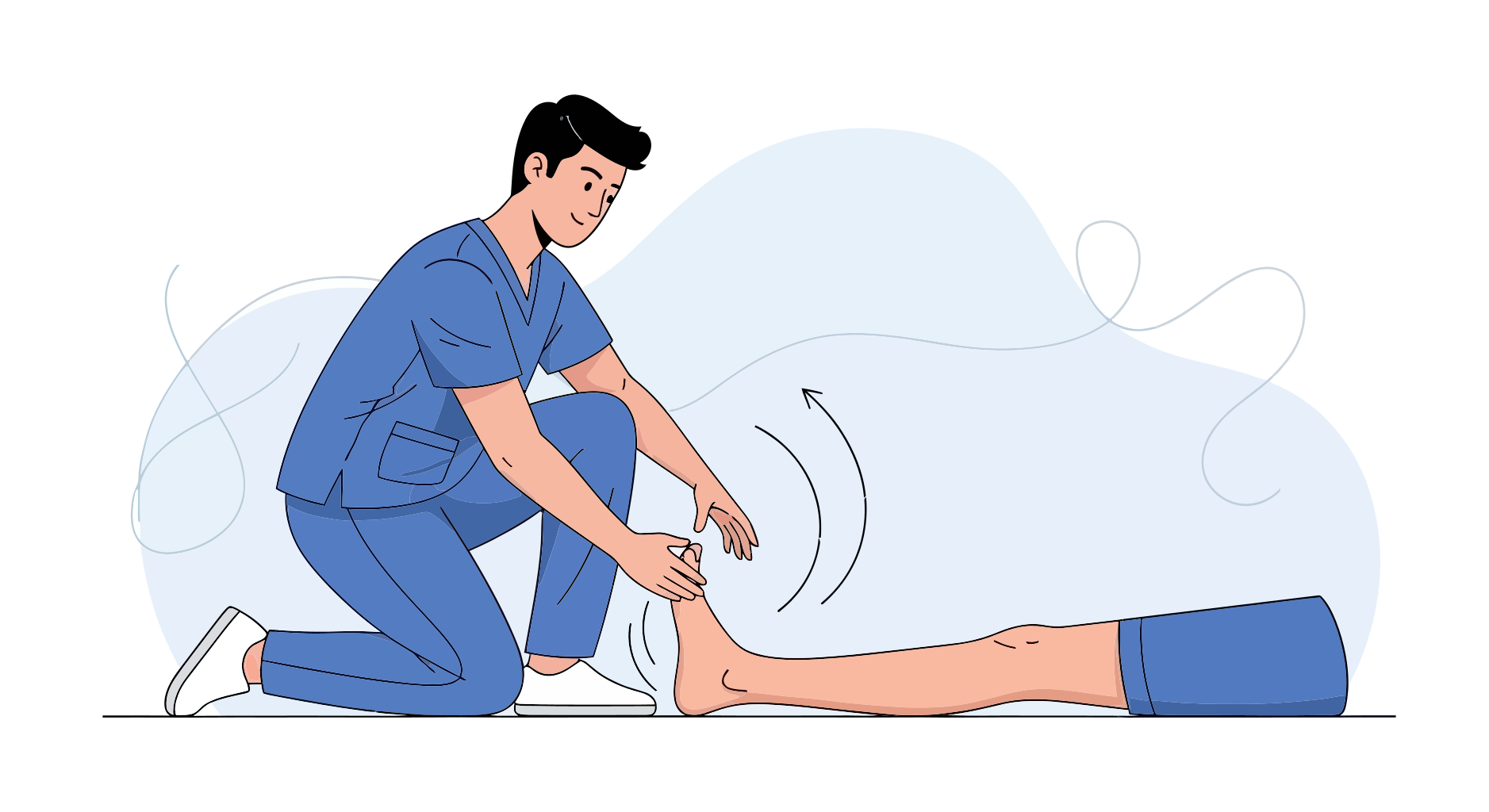
- Step 1: Pain Management and Mobility. We offer several all-natural alternatives to pain medication, including pain-relieving modalities and manual therapy. Manual therapy also helped Jason begin to work on his ankle’s mobility by gently guiding his ankle through its range of motion.
- Step 2: Active Mobility. Eventually, Jason graduated to more active mobility exercises. We showed him stretches and other exercises to restore his ankle’s range of motion. We also helped him stretch out his calf muscles.
- Step 3: Strength and Endurance. It was important for Jason to work on restoring and improving strength–not only in his ankle but throughout his leg.
- Step 4: Functional Training. It wasn’t enough for Jason to restore strength. He also needed to retrain in various functional movements, including his agility and sense of balance. We also worked with him on football-specific movements.
- Step 5: Return to Sport. Although Jason felt fully rehabilitated, he needed to ease back into football. We provided him with a personalized return-to-sport program that allowed him to start training in a way that would minimize the risk of re-injury.
Jason’s treatment plan consisted of both in-clinic sessions guided by his physical therapist and an at-home exercise program to help boost his recovery.
When It Comes to Ankle Sprains, Don’t Skip PT
Ankle sprains rarely require surgery–but physical therapy is essential if you want to fully rehabilitate.
Why? Because someone who suffers one ankle sprain is likely to suffer another, and that’s especially true if they don’t go through rehabilitation. Because Jason took rehab seriously and worked hard to strengthen his ankle and leg muscles, he reduced his risk of future injuries. His efforts during rehab will help protect his ankle in the future.
Call Iberia Sports & Rehab to learn how we can help you with your sprained ankle.
Sources: https://www.choosept.com/guide/physical-therapy-guide-ankle-sprain, https://www.mdpi.com/2077-0383/9/10/3128
Simple Exercises to Stretch and Strengthen Your Ankles
Ankle sprains may be common, but you can avoid them by strengthening your ankles and lower legs and working on your balance. Here are three simple exercises you can perform at home to help protect your ankles–although be sure to check with us before starting them!
Write the Alphabet
This exercise helps improve your ankle’s mobility (and it’s fun). You can perform it while lying on your back or sitting in a chair
- Lift one leg off the ground and write out the alphabet with your foot in the air. Then repeat on the other side.
- Mix it up by drawing lower case letters, upper case letters, or writing in cursive!
Calf Raises
Calf raises help mobility in your ankles while building strength in the calf muscles, which provide additional support to the joint.
- Stand shoulder width apart, ensuring your weight is evenly distributed across both feet. Hold on to something sturdy for balance.
- If you have stairs, stand on the bottom step. Slowly rise onto your toes, ensuring your heels are lifted off the ground.
- Hold for a few seconds, then slowly lower back to the ground. Repeat 10-15 times.
Single-Leg Balance
Finally, this exercise helps improve your balance and stability, which is essential in preventing ankle injuries.
- Stand with your knees slightly bent. Shift your weight onto one leg.
- Next, slowly lift up the foot of the other leg. It should be a few inches off the ground. Hold for 30-60 seconds.
- If this is too challenging, you can start by resting your hand on a chair or fingertips on a wall for support. When it gets too easy, close your eyes (trust us).
If you’d like more information about preventing ankle sprains, call Iberia Sports & Rehab today!
Sources: https://health.clevelandclinic.org/ankle-exercises-weak-ankles
Exercise of the Month
Ankle Alphabets
Start by sitting up straight in a chair. Raise one leg out in front of you. Slowly write the letters of the alphabet with your foot, only moving
at your ankle joint. 3 Sets, 10 Reps. (Materials needed: chair)
Tomato, Peach, and Burrata Salad

This colorful tomato, peach, and burrata salad is summer on a plate with the most delicious herb vinaigrette and plenty of sweet summer fruits and burrata cheese.
Ingredients:
- 1/2 cup extra virgin olive oil
- 1/4 cup balsamic or champagne vinegar
- 1 tablespoon honey
- 1/2 shallot, finely chopped
- 1 clove garlic, grated
- 1 teaspoon lemon zest
- 1/4 cup chopped fresh basil
- 2 tablespoons chopped fresh oregano
- 1 tablespoon chopped fresh dill
- 1 tablespoon chopped fresh thyme
- red pepper flakes
- kosher salt and black pepper
Salad:
- 1 1/2 -2 cups cherry tomatoes, halved if large
- 2-3 peaches, sliced into wedges
- 1 cup pitted fresh cherries
- 8 ounces burrata cheese, at room temperature
- 1/4 cup toasted pumpkin seeds (or other nut/seed) (or other nut/seed)
Instructions:
- To make the vinaigrette: combine all ingredients in a glass jar and whisk until smooth. Taste and adjust the chili flakes, salt, and pepper.
- In a large bowl toss the tomatoes, peaches, and cherries with 1/3 of the dressing. Let sit 15 minutes at room temperature or up to 4 hours in the fridge.
- Break the balls of burrata around the salad. Drizzle with the remaining vinaigrette and top with pumpkin seeds and additional fresh herbs. Serve with grilled or toasted bread.