


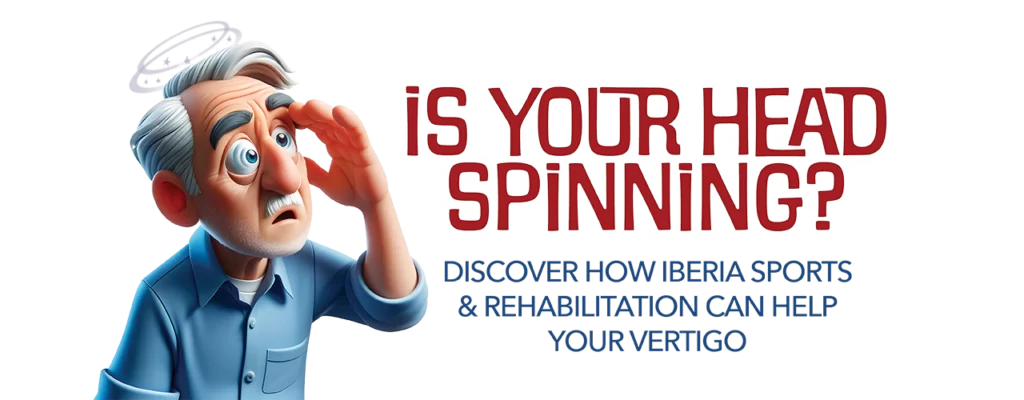
Have you noticed you are not as steady as you used to be? Do you notice that dizziness makes you feel less balanced? No matter your age, you can improve your balance. At Iberia Sports & Rehabilitation, we can help you figure out what is causing your vertigo and/or dizziness and, more importantly, how to resolve it!
Balance is a big deal but we take it for granted. Your balance system is incredibly complex and allows you to walk around obstacles without thinking. However, it can be challenging to perform daily tasks and activities you enjoy when your balance is affected.
If you’ve been feeling dizzy, or you think you may have some of the symptoms of vertigo, call Iberia Sports & Rehabilitation today to schedule an appointment with one of our experienced physical therapists.
What Is Causing Your Dizziness and/or Vertigo?
Dizziness is a general term used to describe a sense of unsteadiness that may be due to a lack of sleep, poor nutrition, overexertion, or a physical ailment (i.e., a head cold or the flu). Dizziness can also occur from something as simple as standing up too quickly after an extended period of rest.
Some accompanying symptoms of dizziness may include:
- Loss of balance
- Lightheadedness or heavy-headedness
- Momentarily impaired vision
- Feeling unsteady or faint
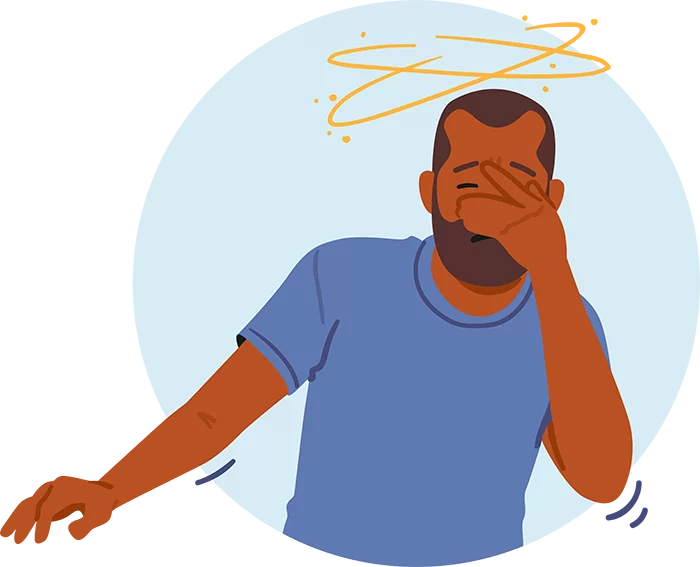
Vertigo is the result of an issue in your inner ear, also known as the “vestibular system.” Your vestibular system helps you maintain your balance and center of gravity by sending messages to your brain regarding your movement.
When the vestibular system is impaired, the messages to your brain are altered, and your movement becomes affected. You may feel as if the world is spinning around you, you can’t focus your vision for prolonged periods, or you can’t stand/move appropriately without feeling like you’ll topple over.

Some common causes of vertigo include:
- Benign Paroxysmal Positional Vertigo (BPPV). This is the most common cause of vertigo. It occurs when the tiny calcium crystals located in your ears break apart and move around to different parts of the ear that they are not supposed to be in.
- Meniere’s disease. This occurs when fluid builds up in your ear(s). This typically includes ringing sounds in the inner ear and sudden waves of vertigo that may last for hours. You may also experience momentary hearing loss.
- Vestibular neuritis. This is an inner ear infection that can cause vertigo.
- Migraines. Migraines can impact your vestibular system, and may be coupled with sensitivities to light or sound, or may also impair your vision.
- Stroke. A stroke affects movement in your whole body. If you recently suffered a stroke, you may experience waves of vertigo which may linger for extended periods of time.
Some accompanying symptoms to vertigo may also include:
- Inability to focus or remain alert
- Double vision
- Nausea or vomiting
- Arm or leg weakness
- Difficulty seeing or speaking
- Sweating
- Abnormal eye movements
How Physical Therapy Can Help Your Balance
Dizziness and vertigo can hinder your balance, limiting your ability to perform even the simplest of tasks. Luckily, no matter the cause, physical therapy for dizziness and vertigo can help.
At Iberia Sports & Rehabilitation, our therapists have some of the most advanced techniques for diagnosing and treating dizziness and vertigo, including vestibular rehabilitation and videonystagmography.
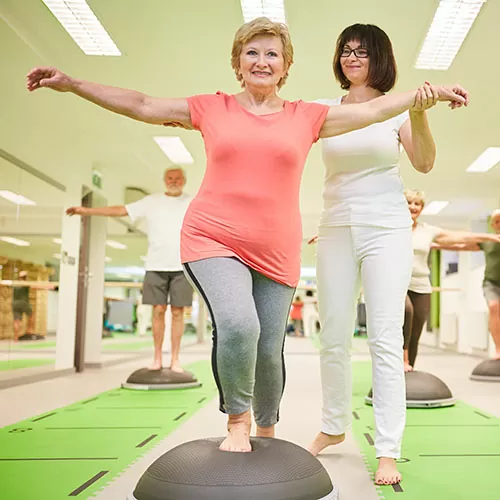
Our physical therapists will perform a proper physical examination and take a thorough medical history to ensure we provide a comprehensive and personalized treatment plan.
The primary goal of the assessment is to identify the specific cause of your dizziness and use a combination of manual therapy, balance exercises therapy, posture corrections, and education to help you resolve your condition.
The most common treatments will focus on:
- Reducing vestibular symptoms through specific head and body movements and positions. These movements help to remove the calcium deposits from the inner ear to alleviate dizziness.
- Balance exercises and vestibular rehabilitation. Specific balance exercises and particular activities focus on decreasing nerve sensitivity and reducing the effects of vertigo.
- Postural education to optimize function.
Our therapists may use videonystagmography to determine whether a vestibular disease is causing your dizziness or vertigo. It is the only test available to decipher whether there is a vestibular loss in one or both ears. This non-invasive test uses infrared goggles to record a patient’s eye movements to determine how well the patient can react to visual stimuli responses sent from the vestibular system.
If you believe you may be experiencing vertigo, contact us today. We’ll provide relief for all of your symptoms.
Book an Appointment Today!
Physical therapy is essential to identify the correct exercises to relieve dizziness and vertigo to improve balance. Contact Iberia Sports & Rehabilitation today to get started!
Patient Success Spotlight
“What an amazing place to be if you want a concerned, trained, devoted, and caring team looking out for you. The exercises that are shown to you are easy to do at home, so you can keep it up all week. The facility is clean with a welcoming vibe, and I can’t say enough good about William, Jason, Alex, Matthew, Kodi, and the many more they have attending to you. I love them all. And let’s not forget Bailey. She will call you to get you in and remind you of your appointment. Everyone there is helpful and knowledgeable. Thank you all!”
— Gwen D.

Iberia Sports and Rehabilitation, LLC
Celebrating 20 Years of Service in New Iberia

COVID-19 and Vertigo
A Surprising Connection
Most of us know that COVID-19 can have a lasting impact on your health, even if you only had a mild case. Fatigue, shortness of breath, and loss of smell or taste are all possible symptoms of what’s come to be known as post-COVID.
Now, a recent study has added a new symptom to the list: vertigo.
Vertigo is a type of dizziness that causes a spinning sensation. You might feel as if you’re spinning, even if you’re standing still, or you may feel as if the room is spinning around you.
It occurs due to issues with your inner ear, which makes up a significant part of the bodily system that controls balance and stability (known as the vestibular system). Vertigo has several potential causes, and two of them seem to be prevalent in people with post-COVID:
• Vestibular neuritis, an inflammation of the inner ear (found in 85.7% of post-COVID patients)
• Benign paroxysmal positional vertigo (BPPV), in which small crystals disrupt inner ear function (found in 14.3% of post-COVID patients)
What Does This Mean For You?
No matter the cause, vertigo can be alarming at best and debilitating at worst. Fortunately, physical therapy at Iberia Sports & Rehabilitation can help you manage your vertigo symptoms with vestibular rehabilitation. Vestibular rehab uses head maneuvers, gaze stability exercises, and balance training to help manage and reduce vertigo attacks.
Want to learn more about how we can help with vertigo? Call us to schedule an appointment today.
Exercise of the Month
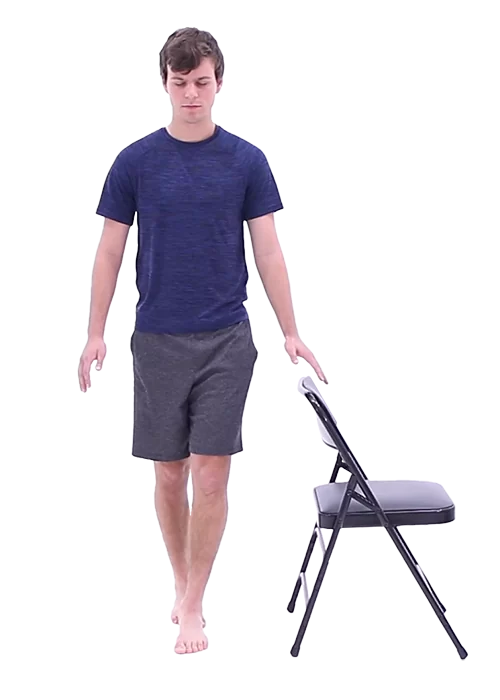
Tandem Balance, Eyes Closed
Stand next to the back of a chair and place one hand on it for support. Place one foot right in front of your other so your heel is touching the tips of your toes. Close your eyes and then remove your hand from the floor. Hold this balance for 30 seconds and repeat.


Honey Garlic Shrimp
This saucy shrimp owes a lot of its flavor to a bold marinade of honey, soy sauce, and garlic, which is music to everyone’s taste buds. For a little extra flavor, we add some minced fresh ginger, but that’s entirely optional.
Whisk the honey, soy sauce, garlic, and ginger (if using) together in a medium bowl. Place shrimp in a large zipped-top bag or tupperware. Pour 1/2 of the marinade mixture on top, give it all a shake or stir, then allow shrimp to marinate in the refrigerator for 15 min or for up to 8-12 hours. Cover and refrigerate the rest of the marinade for the next step. Heat olive oil in a skillet over medium-high heat. Place shrimp in the skillet. Discard used marinade. Cook shrimp on one side until pink — about 45 seconds — then flip shrimp over. Pour in remaining marinade and cook it all until shrimp is cooked through, about 1 min more. Serve shrimp with cooked marinade sauce and a garnish of green onion. The sauce is excellent on brown rice and steamed veggies on the side.
- 1/3 cup honey
- 1/4 cup soy sauce (reduced sodium)
- 1 tbsp minced garlic
- Optional: 1 tsp minced ginger
- 1 lb medium uncooked shrimp, peeled & deveined
- 2 tsp olive oil
- Optional: chopped green onion garnish
Meet Our Team




Let’s Get You Better ASAP!
Don’t let pain dictate your life. Take the first step towards reclaiming your mobility and well-being with our expert support. Start your journey to a healthier you today.